

When you hear “tarot cards,” you might think of mystical readings and fortune telling, but there’s a deeper, therapeutic side to these vibrant cards that’s worth exploring. Let’s dive into the enchanting world of therapeutic tarot and see how it can be a powerful tool in psychotherapy, through the lens of Doctor Strange, the Sorcerer Supreme from the Marvel Universe.
Doctor Strange and the Mystical Tarot
In the Marvel Universe, Doctor Strange would be a likely candidate to use tarot in a therapeutic or insightful way. As the Sorcerer Supreme, Doctor Strange has a deep connection to mystical and esoteric knowledge, often using various magical tools and artifacts to gain insight into different realms and the human psyche. His understanding of the mystical arts and his role as a healer and protector align well with the reflective and symbolic nature of tarot.
The Sorcerer Supreme’s Tools
Doctor Strange is no stranger to the mystical and esoteric. With the Eye of Agamotto, the Cloak of Levitation, and countless other artifacts at his disposal, it’s not a stretch to imagine him incorporating tarot cards into his magical toolkit. The symbolic imagery of tarot aligns perfectly with his mission to protect and heal.
Bridging the Mystical and the Psychological
Imagine Doctor Strange in his Sanctum Sanctorum, guiding a troubled soul through the labyrinth of their mind. He might use the tarot as a bridge between the mystical and the psychological, drawing cards that reflect the individual’s inner turmoil and potential paths to resolution.
Reflecting the Inner Psyche
Tarot, with its rich symbolism and archetypal images, would be a natural fit for Doctor Strange’s practice. He could use the cards to help individuals reflect on their feelings and experiences, facilitating a deeper understanding of their own psyche. The tarot would serve as a mirror, reflecting back parts of your inner world that words might fail to capture.
A Collaborative Journey
In true Doctor Strange fashion, the use of tarot would be a collaborative journey. As he draws a card, he might say, “This card, the Tower, symbolizes upheaval and change. But let’s explore what this means for you personally.” Together, they would delve into the imagery, uncovering insights and connections that guide the individual towards healing.
Embracing the Esoteric
Doctor Strange’s approach to tarot would undoubtedly embrace its esoteric nature. He might explain, “Tarot taps into the collective unconscious, a concept similar to the Astral Plane I often traverse. It allows us to see beyond the surface, to understand the deeper currents shaping our experiences.”

Therapeutic Tarot in Real Life
While Doctor Strange’s mystical practice is a fascinating lens, therapeutic tarot is very much grounded in real-world psychotherapeutic practices. Many folks might roll their eyes or even scoff at the idea of using tarot in therapy, often because of preconceived notions linked to mysticism or a fear of the unknown. But, contrary to popular belief, tarot cards are not just for mystical predictions; they’re also recognized and highly regarded in several psychotherapeutic modalities.
In places like California, where psychotherapy is a regulated practice, professionals undergo rigorous education, training, and credentialing. Among the broad categories of psychotherapeutic modalities, several embrace tarot as a valuable tool, including Jungian analysis, existential psychotherapy, spiritually integrated psychotherapy, narrative therapy, and art in therapy.
The Power of Visual Metaphors
Tarot is fundamentally a visual medium, used to unveil the human psyche. When used in therapy, tarot cards invite clients to reflect on their feelings and experiences evoked by the cards. This reflection facilitates what Jung called the “transcendent function,” where the conscious and personal unconscious unify, leading to greater self-awareness and understanding.
Imagine a client sitting in their therapy session, talking about their week, their struggles, their dreams. Suddenly, there’s a moment where words aren’t enough, where something deeper needs to be uncovered. That’s when we turn to the tarot. Whether it’s a single card or a spread, these images act like mirrors, reflecting back parts of your inner world that words might fail to capture thus unlocking the unconscious mind to gain insight.
No Experience Required
You don’t need any prior experience with tarot cards to benefit from this approach. Think of the Rorschach inkblots—those ambiguous shapes that can look like anything depending on your unconscious perceptions. Tarot works similarly. As cards are pulled in session an exploration of imagery begins, you’ll share thoughts, feelings, and experiences that the cards evoke.
From Universal to Personal
While universal tarot meanings can be helpful, the real magic happens when we dive deep into what these cards mean to you personally. It’s less about getting the “correct” meaning and more about understanding what these images stir within you right now.
For instance, exploring a dream through tarot can be incredibly illuminating. Dreams, like tarot, reflect both personal and collective unconscious material. By using tarot cards, we can create picture metaphors for dream scenes, helping to decode and bring to light the rich, often hidden meanings contained within our dream material.
A Collaborative Journey
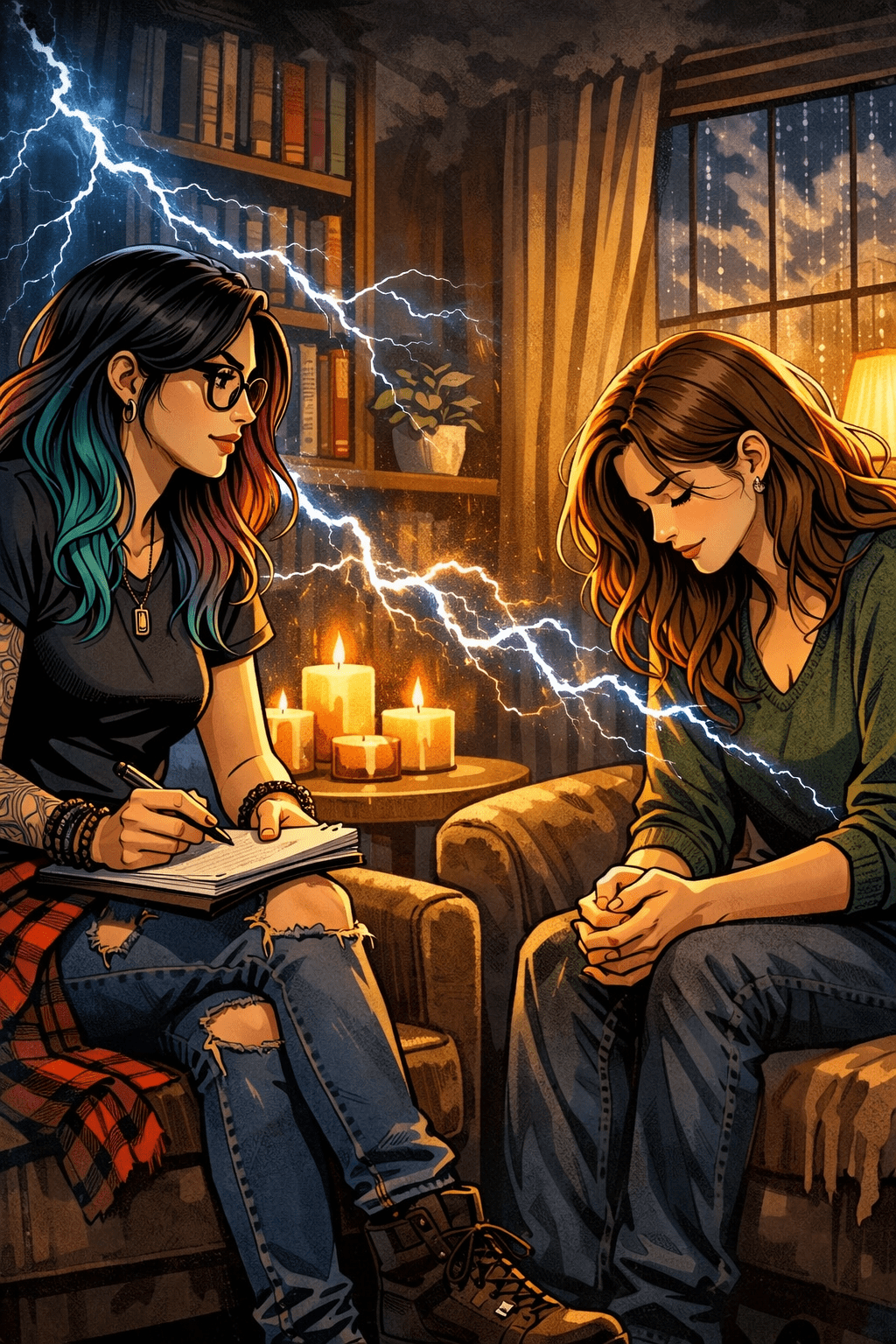
Using tarot in therapy is a collaborative process. The Therapist and the client decide together when to pull the cards and how to interpret them. Whether it’s building a storyboard with a spread of cards or drawing a single card to explore a specific feeling or situation, the process is dynamic and deeply personal.
Practical Applications for Therapists
Integrating Tarot into Therapy Sessions
Therapists interested in incorporating tarot into their practice can start by familiarizing themselves with the symbolism and archetypes of the tarot deck. Begin with a few cards or a simple spread to avoid overwhelm. Use tarot as a complement to existing therapeutic techniques rather than a replacement.
Ethical Considerations
It’s crucial for therapists to maintain professional boundaries and ethical standards when using tarot. Clearly explain to clients how tarot will be used in therapy, ensuring they understand it’s a tool for self-reflection rather than divination. Obtain informed consent and be transparent about the process.
Training and Resources
Therapists can benefit from specialized training in therapeutic tarot. Workshops, online courses, and reading materials on integrating tarot with psychotherapy can enhance their skills and confidence in using this tool. Networking with other professionals who use complementary practices can provide additional support and insight.
Practical Benefits for Clients
What to Expect in a Session
Clients may be curious or apprehensive about using tarot in therapy. Explain that no prior experience with tarot is necessary and that the focus will be on the personal meaning of the cards rather than traditional interpretations. Encourage clients to share their thoughts and feelings about the imagery to foster deeper self-exploration.
Addressing Concerns
Clients might have concerns about the mystical or esoteric aspects of tarot. Reassure them that in therapy, tarot is used as a psychological tool to facilitate insight and reflection. It’s not about predicting the future but about exploring the present and understanding one’s inner world.
Success Stories
Share anonymized examples or case studies where therapeutic tarot has been beneficial. Hearing about positive outcomes can help clients feel more comfortable and open to trying this approach.
FAQs for Both Therapists and Clients
Is Tarot in Therapy Evidence-Based?
While tarot itself may not have extensive empirical research, it can be integrated within evidence-based frameworks like Jungian analysis or narrative therapy. Explain how tarot supports these approaches by providing visual and symbolic elements that enhance therapeutic dialogue.
How Can Tarot Enhance Traditional Therapy?
Discuss how tarot can offer unique insights and facilitate breakthroughs when clients struggle to articulate their feelings. The visual nature of tarot can help unlock unconscious thoughts and emotions, making it a powerful complement to verbal therapy.
Other Therapeutic Modalities Embracing Complementary Practices
– Jungian Analysis: This modality focuses on integrating the unconscious with the conscious mind, often using symbols and archetypes. Tarot, with its rich symbolic language, fits seamlessly into this approach.
– Existential Psychotherapy: This therapy explores issues related to existence, such as meaning, freedom, and isolation. Tarot can help clients explore these themes through its imagery and symbolism, fostering deeper understanding and insight.
– Spiritually Integrated Psychotherapy: This approach incorporates spiritual beliefs and practices into the therapeutic process. Tarot can serve as a spiritual tool, helping clients explore their inner worlds and connect with their spiritual beliefs.
– Narrative Therapy: This therapy helps clients reframe and rewrite their personal stories. Tarot cards provide visual metaphors that can enhance storytelling and self-discovery, making it easier for clients to explore and reshape their narratives.
– Art in Therapy: Utilizing creative processes like drawing and painting, art in therapy helps clients express emotions and explore their inner worlds. Tarot, as a visual and symbolic tool, complements this approach by providing additional layers of meaning and insight.
– Dream Analysis: Rooted in Jungian and psychoanalytic traditions, dream analysis explores the symbolic meanings of dreams. Tarot cards can be used to decode and understand these symbols, deepening the client’s exploration of their unconscious mind.
– Gestalt Therapy: Emphasizing present-moment awareness and the integration of mind, body, and emotions, Gestalt therapy uses techniques like role-playing and empty chair exercises. Tarot can enhance these techniques by providing symbolic representations that clients can interact with and explore.
Wrapping Up
Therapeutic tarot is more than a tool; it’s a gateway to deeper understanding, self-reflection, and personal growth. By blending the visual, symbolic power of tarot with the structured support of psychotherapy, therapists and clients alike can uncover layers of the psyche that might remain hidden through words alone. So next time you think of tarot, remember its potential to transform and illuminate your therapeutic journey, turning the mystical and esoteric into the profoundly meaningful, much like the way Doctor Strange would harness its power in the Marvel Universe.
Written by Jen Hyatt, a licensed psychotherapist at Storm Haven, Counseling & Wellness in Temecula, California.
Disclaimer: The information provided in this blog post is for educational and informational purposes only and should not be considered as professional mental health advice.
Disclaimer: References to Doctor Strange and associated characters are used purely for illustrative and educational purposes in this blog post. This post is not affiliated with or endorsed by Marvel Comics, Marvel Studios, or their affiliates. All trademarks and copyrights belong to their respective owners. The content provided here is for informational purposes only and is not intended as professional mental health advice.



 The Nerdie Therapist
Leave a comment