
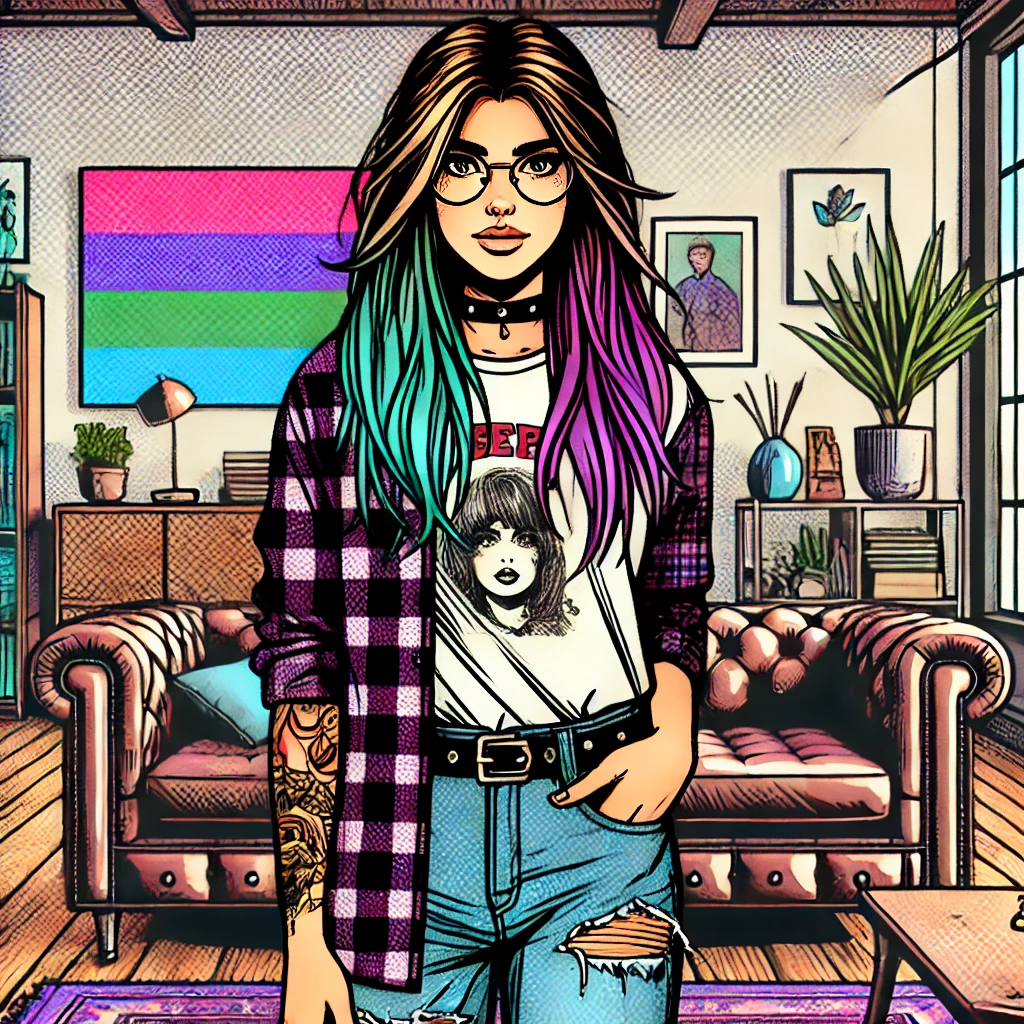
Authenticity isn’t one-size-fits-all—whether it’s combat boots, colorful hair, or glasses, wear what feels like you.
I’ll never forget the day, back in 2015, when I sat across from a colleague, tasked with having the talk about their attire. They had chosen something colorful, expressive—something that clearly said them. But it didn’t align with the “dress code.” So there I was, an unwilling enforcer, stumbling over words I didn’t believe in, trying to explain why their outfit wasn’t “professional enough.”
It felt like trying to stuff a flame into a jar, snuffing out the spark of individuality that made them who they were.
Then there were the nonprofit meetings—Monday mornings under fluorescent lights, where the air always seemed heavy with rules and reminders. “Remember the dress code,” someone would chirp, as if it were a mantra. I sat in those meetings, fury bubbling just below the surface, staring at my beige cardigan and sensible shoes like they were shackles of conformity.
I didn’t know it then, but those moments would shape me. They showed me how dress codes—those seemingly harmless structures—don’t just limit what we wear. They strip away pieces of who we are, one muted outfit, one judgmental glance, one “should” at a time.
The Shoulds That Box Us In
We all know the “shoulds.”
You should wear calming, neutral colors—nothing too bold or loud. Clients need to feel relaxed, after all.
You should dress in a way that blends in. Professionalism is about being serious, not memorable.
You should avoid anything that might raise an eyebrow. Play it safe—no room for creativity here.
The problem with these shoulds is they’re not about helping us do our jobs better. They’re about control. About squeezing us into a box that wasn’t built for individuality or authenticity. And the kicker? Even when you contort yourself to fit, it’s never enough.
The Personal Impact of “Shoulds”
Maybe you’ve felt it, too—that moment of hesitation as you decide if you can truly show up as yourself. Maybe it’s the ripped jeans in your closet you’ve been too afraid to wear, or the tattoo you always cover up before walking into the office. I get it, because I’ve been there.
But let me tell you: the moment you let go of those “shoulds,” everything changes.
When your outside matches your inside, you’re not just dressing authentically—you’re living authentically. Be you, unapologetically.
When Your Outside Matches Your Inside
The first time I let go of the “shoulds,” it wasn’t a grand act of rebellion. It was a quiet moment of liberation: a well-worn flannel over a graphic tee, paired with my trusty combat boots. My brunette balayage hair, streaked with hints of purple and aquamarine, framed my face like my own personal rebellion against the monotony.
Walking into the therapy room that day, I felt a flicker of uncertainty. Would my clients judge me? Would they think I wasn’t serious enough? But as the session unfolded, something unexpected happened. I was more present, more at ease. My clients noticed—not my boots or my hair but the way I showed up, fully engaged and authentic.
And when I roll up my sleeves to reveal tattoos that tell my story—a visual expression of who I am—it’s another layer of showing up as my whole self. It’s a conversation starter, a symbol of individuality, and a way of saying, This is me.
Authenticity in Action
It’s funny, isn’t it? When you stop wearing someone else’s uniform, you finally have the freedom to bring your whole self to the table. And in that authenticity, you create space for your clients to do the same.
Wear What Makes You Happy—Blazer, Leather Jacket, or Both
Whether you’re meeting a client, leading a meeting, or working behind the scenes, what you wear should support you in showing up as your full self. Here’s the thing: authenticity doesn’t mean rejecting one style for another. It means embracing your style—whether that’s a crisp blazer that makes you feel polished and powerful, a leather jacket that channels your inner rebel, or a mix of both depending on the day. What matters is how it makes you feel—confident, comfortable, and ready to show up fully as yourself.
Authenticity is about giving yourself permission to feel good in what you wear—not because it fits someone else’s definition of ‘professional,’ but because it feels like you. Maybe the blazer says, ‘I’ve got my life together,’ while the leather jacket whispers, ‘But I might break a rule or two.’ You don’t have to choose just one—both can hang in your closet, ready to suit whichever version of you steps out that day. After all, you’re not one-dimensional, so why should your wardrobe be?
Clothing as a Reflection of You
Your wardrobe doesn’t just tell a story—it tells your story. Every piece you choose has the potential to reflect your personality, your values, and the energy you want to bring into the world. When you wear what makes you happy, you send a message to yourself and others: I’m showing up fully as me.
It doesn’t matter whether your outfit follows the “rules” or breaks every one of them. What matters is that it makes you feel confident, comfortable, and capable of doing the work you’re meant to do—whether that’s sitting with a client, giving a presentation, or simply navigating your day.
The Ripple Effect of Showing Up Fully You
When you wear what makes you happy, it creates a ripple effect. Your confidence becomes contagious, and your authenticity inspires others to embrace their own. It’s not about making a statement—it’s about creating a space where people feel encouraged to do the same.
And isn’t that what we’re all striving for? To build a community where individuality is celebrated, whether it’s through a tattoo sleeve, a pop of colorful hair, or the timeless simplicity of a favorite cardigan.
So, blazer or leather jacket, combat boots or loafers, bold patterns or neutral tones—choose what makes you feel alive, what lets you step into the world as your full self. Be uniquely you, unapologetically. And let that be the style you carry into everything you do.
Joy in Authenticity as a Community
One of the greatest joys I experience as a practice owner is watching clients walk into our office, unapologetically themselves. We proudly serve the LGBTQ+ community, fostering an environment where authenticity isn’t just welcomed—it’s celebrated. Seeing clients step into our space—comfortable, expressive, and fully aligned with who they are—reinforces that we’re creating a community where everyone can truly belong.
Our practice has become a haven where combat boots, bold patterns, colorful hair, and tattoos aren’t just accepted—they’re celebrated. It’s a place where individuality is not only welcomed but encouraged. Authenticity, after all, isn’t just a personal journey—it’s a shared experience. It’s a ripple effect that starts with giving yourself permission to be who you are and grows into a community that thrives on celebrating individuality and diversity.
The Societal Roots of Corporate Dress Codes
Perceived Confidence and Competence
Dress codes are often tied to the belief that looking polished equates to being capable. A tailored blazer is seen as a visual shortcut to inspire trust and project authority. But confidence doesn’t come from a suit—it comes from showing up authentically. When we equate competence with conformity, we lose sight of individuality and the strengths that come with it.
Power Dynamics and Hierarchical Structures
In many workplaces, clothing is used to reinforce power dynamics. Executives wear suits; entry-level employees dress in business casual. This visual separation reminds everyone of their place in the corporate ladder.
Dress codes also dictate what is considered “appropriate,” leaving employees to navigate a minefield of unspoken rules. It’s not about the clothes—it’s about maintaining control.
Cultural Norms and Gender Expectations
What’s considered “appropriate” is deeply rooted in cultural norms and gendered expectations. Women have long been expected to wear skirts and heels, while men adhere to suits and ties. For queer and nonbinary individuals, these rigid rules can feel alienating or outright hostile, creating barriers to true self-expression.
These outdated norms persist because they reflect tradition—not progress. By clinging to them, we miss opportunities to foster creativity, inclusion, and authenticity.
Imagine a World Without Boxes
Now, imagine this:
A world where therapists no longer feel the pressure to hide behind neutral tones and sensible shoes. Where individuality isn’t something we’re forced to tone down, but something we’re encouraged to celebrate.
A world where every therapist feels free to bring their whole self into their work, modeling the very authenticity and vulnerability we encourage in our clients.
What if we didn’t just tell clients to embrace their uniqueness but lived it ourselves—through our words, our actions, and even our appearance?
That’s the future I’m working toward: a world where our field celebrates individuality, diversity, and humanity in all its messy, beautiful forms. Because when we let go of the “shoulds,” we don’t just liberate ourselves. We create a movement.
Be You. Fully You.
The 2015 version of me couldn’t have imagined saying this, but here it is: Ditch the blazer if it doesn’t feel like you. Ditch the rules that keep you small. Ditch the box that was never built for you to thrive in.
Because when you let your outside match your inside, you’re not just dressing authentically—you’re living authentically. You’re showing the world that individuality isn’t something to hide; it’s something to celebrate.
So, wear the flannel. Rock the boots. Let your tattoos tell your story. And don’t be afraid to show off that aquamarine (or rainbow) streak in your hair. Because when you stop hiding behind the “shoulds,” you make space for the people, opportunities, and connections meant for you.
Be bold. Be unapologetically you. And in doing so, give others the permission they didn’t know they needed to do the same. You’re not just choosing an outfit—you’re choosing freedom.
Written by Jen Hyatt, a licensed psychotherapist at Storm Haven Counseling & Wellness in Temecula, California.





 The Nerdie Therapist
Leave a comment