
A Note Before You Step Into the Village
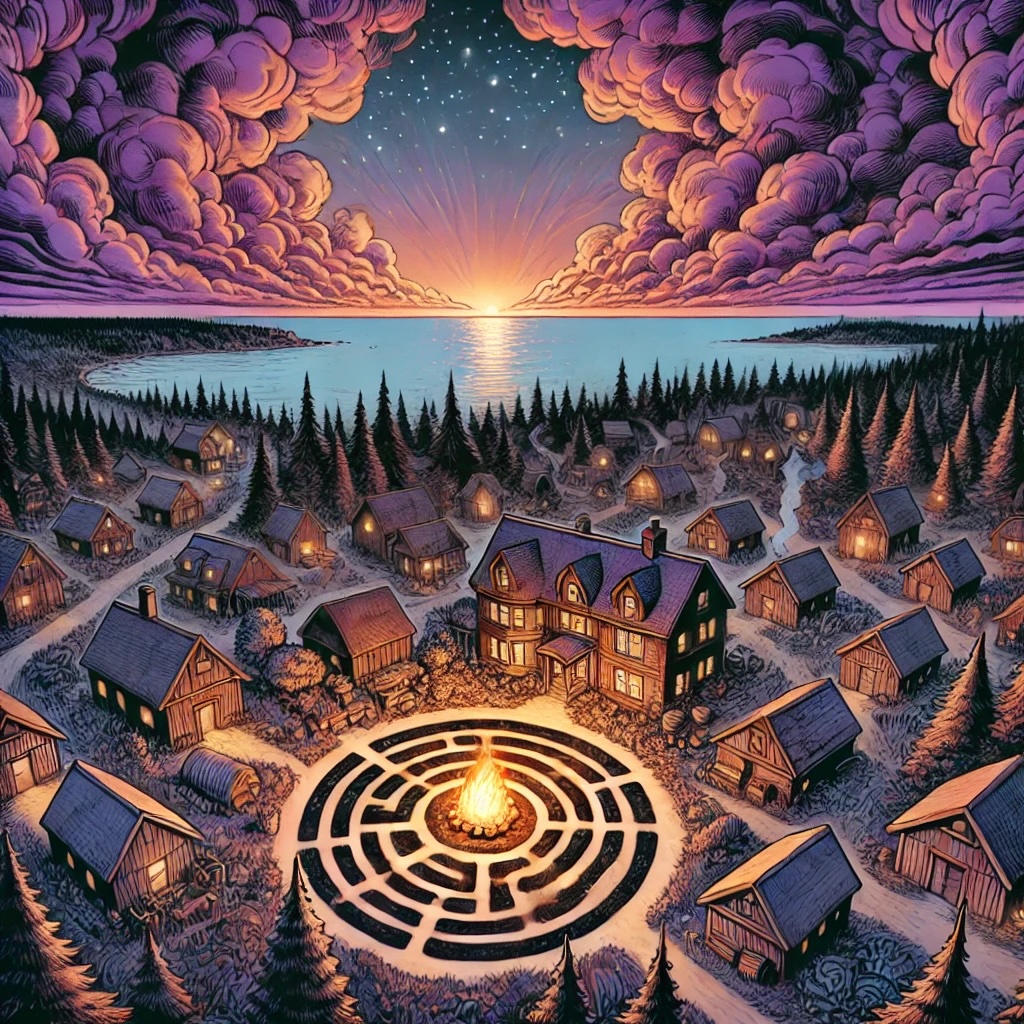
Storm Haven has always been more than an office suite. It’s a symbolic village built from human connection, shared purpose, and the strange devotion of holding space for others. The cottages, hearths, and winding paths in this story represent the inner world of a group practice, where relationships form and shift across seasons of arrival and departure.
This reflection speaks to anyone who has poured heart and time into a clinician’s growth only to feel the quiet ache when they choose a new path. The village is ready. Step in.
When the Quiet Hour Arrives
There comes a moment after someone you’ve mentored walks out the door when the air changes. Leadership reveals itself as a strange kind of love: part vision, part devotion, part belief that what you’re building matters. Storm Haven began as one cottage and grew into a village shaped by many hands. Each departure, no matter how healthy, tugs at beams you carved yourself.
The Softer Kind of Heartbreak
The grief here isn’t dramatic. It’s the soft ache of imagining a shared future that won’t unfold. You cheer for their growth, yet a small part of you hoped their growth would continue beside you. It’s a natural tension: the wish for their thriving living alongside the wish they would stay.
The ache isn’t dysfunction. It’s a testament to care.
The Hidden Grief of Being a Practice Owner
When a clinician leaves on good terms, your chest may still tighten. Nothing went wrong, yet something still hurts. That’s because attachment in a practice forms through shared stories, supervision, laughter, and the slow weaving of futures in your mind. When someone leaves, you lose not only the person but the storyline you quietly co-authored.
This grief is often invisible and unnamed. But it’s real, valid, and nearly universal among leaders with heart.
The Founder’s Attachment System
Leadership forms quiet bonds you never meant to form. You imagine potential before others see it. You design pathways in your mind that feel natural and right. When reality diverges from those imagined arcs, your internal map dissolves, and your system interprets that dissolution as loss.
This is not pathology. It’s proof of devotion.
Your mind may approve of their departure while your heart mourns the blueprint you built. Both truths are allowed to exist.
When Vision Outpaces Reality
Practice owners are visionaries by nature. You see possibilities long before they materialize. But when your vision for someone’s future extends further than their own desire or readiness, heartbreak follows.
Sometimes you build for individuals rather than the Haven without realizing it. And when they leave, you’re left dismantling internal scaffolding you lovingly constructed. The emotional residue can feel like disorientation or embarrassment, but it’s simply recalibration. A return to equilibrium.
Releasing the investment doesn’t mean shrinking your heart. It means redirecting your warmth back to the ecosystem instead of a single storyline.
The Subtle Signs You’re Building for a Person Instead of the Haven
Sometimes the heart gets ahead of the architecture. You begin shaping future roles, pathways, or opportunities around one clinician without even realizing it. It’s tender. It’s human. And it often shows up quietly.
You might notice faint shifts in your internal landscape:
• a flicker of resentment when someone steps away from a role you imagined for them
• a sense of destabilization when their interests or timeline drift from the one you pictured
• the impulse to create opportunities they have never explicitly asked for
• a tightening in your chest when they don’t mirror the passion you felt on their behalf
These are not failures of leadership.
They are simply signs that your vision momentarily attached itself to a person rather than the Haven.
Once named, the spell gently dissolves.
Your energy returns to the ecosystem instead of orbiting one storyline, and leadership becomes steadier again.
The Weight of Unlived Chapters
When someone leaves, you grieve not only who they were but who they were becoming inside the village. Timing plays a role, too; readiness is rarely mutual. Vision was never a contract. It was a gift.
The shift forward is offering possibilities to the village, not building pathways for individuals. The Haven holds the long-term vision now.
Why the Haven No Longer Funds Individualized Professional Pathways
Early on, it felt generous to invest in a clinician’s advanced training. But as seasons passed, the truth emerged: when the Haven funds individualized growth, the investment often leaves with the villager. Ecology requires sustainability. And sustainability means investing in shared structures, not personalized futures.
The Haven now invests in collective training and enduring systems rather than subsidizing individual trajectories. This boundary honors longevity, fairness, and the village as a whole.
Turning Point Insight: From “I Build for You” to “I Build for the Haven”
Eventually the truth settles in: the practice isn’t meant to be built for singular people. It’s meant to be built for the Haven. When structures belong to the ecosystem, not individuals, the village steadies. You become a steward rather than an architect tailoring cottages for one future occupant at a time.
This shift is liberation wrapped in grief. It frees your energy, clarifies your leadership, and strengthens the Haven’s spine.
The Haven as a Living Ecosystem
An ecosystem lives through movement, not stasis. Departures create space for new growth. Some exits even restore balance, clearing pathways you didn’t realize were blocked. The village thrives not through retention alone, but through vitality, renewal, and natural cycles.
Your role is not gatekeeper, but steward. You tend the soil, shape the culture, and keep the hearth burning regardless of who gathers.
When a Departure Quietly Strengthens the Haven
Sometimes a departure doesn’t rupture the ecosystem. It recalibrates it.
Not every goodbye is a wound. Some are a release of energy that was stretched too thin, misaligned, or quietly draining the village in ways no one could name until the space opened. There are exits that unclog pathways, soften tensions, and restore balance to the rhythm of the Haven itself.
Sometimes a clinician leaves and the village exhales.
Not from relief, but from the natural settling that happens when something out of harmony moves on. You may not see the imbalance until it’s gone. You may not realize how much space someone was unintentionally occupying. Or how much room for new life was waiting beneath the surface.
Some departures strengthen the Haven by:
• creating space for someone whose gifts fit the ecosystem with ease
• freeing up bandwidth you didn’t realize you were pouring into misalignment
• allowing the culture to breathe again
• restoring pathways that had narrowed around one person’s needs or pace
This is not betrayal.
It’s ecology.
Ecosystems thrive through flow, through the gentle clearing that makes way for new roots to take hold. Even departures that sting can ultimately reveal themselves as acts of balance, returning the Haven to its natural rhythm.
Let this truth soften the fear that every goodbye signals a loss.
Sometimes, it’s the soil preparing itself for a stronger season ahead.
Creating Roles That Endure Beyond Individuals
Roles built for people collapse when those people leave. Roles built for the Haven remain available, steady, and adaptable. When leadership opportunities belong to the village instead of individuals, you no longer rebuild every time someone steps away.
This is the relief you’ve been craving: a sturdier ecosystem where departures don’t dismantle structure.
The Shadow of the Builder / Steward
Beneath the devotion lives a whisper: “If I nurture you, you’ll stay.” This shadow isn’t manipulation; it’s longing for continuity. When someone leaves, that shadow may feel betrayed. Naming it transforms it from a wound into wisdom.
Caring is not a bargain. It’s an offering. And offerings are not guarantees.
Healthy Rotation vs. Dysfunctional Turnover
Why Clinicians Leave Even When the Haven Is Good
One of the most disorienting parts of leadership is realizing people don’t only leave when things are bad. Sometimes they leave precisely because things have gone well. Their nervous system finally has enough safety to ask, “What do I want next?” and the answer leads them beyond your gates.
Clinicians may leave for autonomy: the pull toward solo practice, flexible scheduling, or designing their week around caregiving, chronic illness, or their own mental health. They may love your culture and still crave the sovereignty of calling every shot in their business.
Others leave for fit of season. What worked in their twenties no longer fits their forties. Commutes change. Partners change jobs. Kids need different things. A therapist can feel immense gratitude for the Haven and still know their current life chapter calls for a different structure.
Some leave for specialization. They discover a niche your practice isn’t built to fully house, or they’re drawn to settings you don’t offer: hospital work, academia, retreats, program development. The Haven may have been the greenhouse where they realized what kind of tree they are, and now they need a different forest.
And sometimes, they leave for money or risk tolerance. Group practice can be a beautiful, stable container. It can also be a stepping stone. A therapist can appreciate fair pay and support while still wanting to see what’s possible financially or creatively on their own.
None of these reasons erase the goodness of their time in the village. Their leaving is not a quiet indictment. It is often a sign that your ecosystem did exactly what it was meant to do: provide enough safety, mentoring, and growth that they could see their next horizon clearly.
When Rotation Is Healthy
Some departures reflect natural migration; they are the signs of a well-tended ecosystem, not fractures.
When Turnover Signals a Deeper Problem
Other departures reflect structural or relational misattunement. These are invitations, not accusations, to look at the soil more closely.
Rotation is information, not condemnation.
Honoring the Heartache Without Letting It Erode the Vision
The ache may tempt you to withdraw warmth, shrink your vision, or brace against future disappointment. But a village built from self-protection becomes a fortress, not a Haven.
Your work is to stay open without staying exposed. To pour warmth into the ecosystem, not into the hope that individuals will remain.
Retention is not a measure of worth. Stewardship is.
You’re Not Meant to Hold This Alone
Even the strongest stewards need a circle. Villages have councils for a reason. Leadership was never meant to be carried in isolation.
When a departure stirs confusion, grief, or self-doubt, it can feel tempting to retreat inward and shoulder everything alone. But no ecosystem thrives without shared regulation.
Let someone sit at the hearth with you.
A trusted supervisor.
A colleague who understands the terrain.
A mentor who has weathered seasons of their own.
Borrow their steadiness when yours flickers. Let them remind you of what is still true when your nervous system forgets it. The burden lightens the moment it becomes witnessed.
Your role is to steward the Haven.
But you, too, deserve a Haven.
The First 72 Hours: A Steward’s Guide
The window right after someone announces they’re leaving is often the most tender stretch of leadership. Your system floods with reactions before your strategy has time to arrive. The ache sharpens. The protector tightens its grip. The mind races ahead into a dozen imagined futures, each one more dramatic than the last.
These first three days are not for decision-making.
They are for settling.
Slow becomes your anchor here.
Pause instead of planning.
Breathe instead of building.
Let your nervous system arrive before your leadership does.
Avoid rewriting the entire architecture of the Haven in one night. You don’t need a ten-point plan. You don’t need to map new pathways. You don’t need to predict your village’s future from inside an emotional storm.
What you do need is grounding.
Drink water.
Take a walk.
Talk to someone who knows your heart.
Let supervision or consultation hold a bit of the weight.
Touch the familiar—your notebook, your routines, your rituals.
Return to the present moment of what is true right now.
No ecosystem makes structural decisions in the middle of a lightning strike.
Neither should you.
At the end of these first 72 hours, clarity begins to return.
Not all at once, but in small, steadying pieces.
Enough for you to see the village again.
Enough for you to remember that departures are weather, not collapse.
Enough for your leadership to rise—not from urgency, but from grounded stewardship.
Fortifying the Haven So It Doesn’t Burn When Someone Leaves
A well-tended village doesn’t collapse because one cottage goes dark. But in the early years of leadership, it can feel that way. One departure can send a tremor through the system, tricking you into believing the Haven is only as strong as its most recent occupant.
It isn’t.
The Haven endures when its architecture is stronger than any individual storyline. And strengthening that architecture doesn’t require grand gestures. It requires faithful, consistent tending of four essential pillars.
Pillar One: Roles Belong to the Haven, Not the Person Holding Them
When a role is built around a single clinician, their departure leaves a crater.
When a role is built for the Haven, anyone can step into it when the time is right.
This alone keeps the ecosystem from collapsing under vacancy.
Pillar Two: Systems Stay Steady Even When Faces Change
Scheduling. Referrals. Supervision rhythms. Communication channels.
These are the bones of the Haven.
When the bones stay consistent, transitions create ripples, not ruptures.
Pillar Three: Emotional Investment Lives in the Collective, Not the Individual
Care deeply about your clinicians, yes.
But pour the rootstock of your devotion into the Haven itself.
This protects your heart from swinging between overinvestment and withdrawal.
It protects the village from becoming organized around the gravitational pull of one person.
Pillar Four: The Haven Has a Future That Exists Independent of Who Stays
This is the shift that changes everything.
The Haven’s long-term vision belongs to the Haven—not to the timeline, preferences, or presence of any single villager.
When someone leaves, the vision stays intact.
When someone new arrives, they step into a structure already humming with purpose.
When these pillars hold, the village no longer feels flammable.
Someone leaves, and yes—it hurts because you cared.
But the hearth still glows.
The paths remain clear.
The soil keeps breathing.
The Haven receives the transition without burning, without breaking, without losing its center.
This is how you protect the ecosystem you’ve built:
not by gripping every villager tightly,
but by strengthening the architecture they pass through.
A fortified Haven doesn’t fear departures.
It absorbs them.
It transforms them.
It keeps glowing.
Recommitting to the Haven as the Source
Eventually the fog lifts. The empty cottage becomes space again. The pathways shimmer with possibility. You recommit to the Haven itself, not the occupants. Devotion directed toward the ecosystem steadies your nervous system and restores your creative energy.
As you pour into the Haven, the Haven begins pouring back.
Practical Boundaries for the Compassionate Founder
Structure carries what your heart shouldn’t. Treat departures as rotations. Create rituals to ground yourself after transitions. Reserve your deepest emotional investment for the collective, not individuals. Build systems before you need them. Let roles belong to the Haven. Diversify the practice’s supports. Let the hearth, not a single cottage, stay central.
A fortified Haven glows because its architecture is solid, not because villagers remain forever.
The Way Forward for Tender-Hearted Leaders
Once you shift from individual attachment to ecosystem stewardship, leadership becomes less brittle. Tender-hearted founders are not “too much.” Their warmth is the lantern that lights the village. The key is directing that warmth toward sustainable structures so the Haven thrives independent of any one story.
Leadership isn’t measured by who stays. It’s measured by the vibrancy of the village you tend.
Reflection Prompts
Which part of me aches when someone leaves, and what does it believe?
Is this grief present-day or echoing older wounds?
Am I building for individuals or for the Haven?
Where can pathways be redesigned to serve the ecosystem?
What distinguishes healthy rotation from red flags in my practice?
When someone leaves, it hurts because you cared.
But the Haven endures because you learned how to steward a system, not a storyline.
The Haven Keeps Glowing
As the story closes, the hearth burns steady. The Haven was never fragile; your heart was simply learning how to lead without losing itself. People come, grow, leave, return, and ripple outward with the Haven’s signature in their work.
You are not losing them. You are extending the Haven’s reach through them.
This village endures because of your stewardship, not because of who stays. Your next season waits beyond the gate, warm and full of possibility.

Disclaimer
This blog post is intended for informational and educational purposes only and reflects the author’s perspectives and experiences as a mental health professional. It is not a substitute for formal training, supervision, or individualized clinical guidance. Therapists are encouraged to consult their own professional resources, supervisors, or peers when applying concepts to their practice.





 The Nerdie Therapist
Leave a comment